

Well helloooo world. I feel like I fell asleep in February and woke up in spring! We were down for the count for about two weeks with back-to-back respiratory illness and norovirus–thankfully we’re all on the mend or recovered now.
I had a conference for my oldest child last week. He’s in early elementary school, on the cusp of reading and writing. And they are drilling those kids on sight words, reading aloud, sounding things out, etc. His teacher–who is lovely, by the way, and I am not implicating her in what I’m about to write–was eager to show me all of the progress he’s made since the last conference last fall.
Every time I go to conferences, I feel like I’m supposed to have more questions, more elation, more investment all around. It’s not that I don’t care about how my child is doing in school, which I’m afraid is how it comes off. It’s just that I don’t think six-year-olds need to be drilled in academic subjects from the moment their little feet cross the threshold to kindergarten.
And I’m such a young mom for this place I live in, too–I was 23 when I got pregnant for the first time. That’s not abnormal for most places but it definitely is here. So I feel like, combined with my lack of questions and excitement, I come off as “20-something who’s just, like, whatever.” Direct quote from a fellow elementary school mom describing what this school isn’t, by the way. I was, in fact, still in my 20s at the time.
No, as a former high-achieving “gifted” child who lived that life from the moment I moved to this city, my beliefs are based on personal experience. And not just my own. I tutored (both volunteer and for pay) for all four years of high school. Every child I worked with was capable of meeting the standards expected of them. There are very few actual idiots out there. But the pace, intensity, large class sizes, and lack of practical education did not serve those kids and definitely did not inspire a love of learning.
I tried to make it fun, but schoolwork in this country is not of a collaborative nature–so that eliminates the fun social aspect of work. It is not interdisciplinary, and that makes it hard to see how such work is applicable to the real world. Because let’s face it, it isn’t.
I started a school garden club my junior year of high school. I applied for and received a small grant and donations from a local garden store. I had a spreadsheet where people signed up to water and weed the garden all summer. I brought our produce to the cooking classes to use. After I graduated, my sister carried on and collaborated with elementary schools to build gardens there, too. The one at my child’s elementary school is still there, but the others–including at the high school–have been torn down. I truly believe in the value of kids getting their hands in the dirt and empowering themselves by growing things they can eat. But you can’t put it on a resume.
When I tutored, I came to understand that the American education was built to serve the privileged few–including myself and my high test scores–and leave everyone else behind. But it did a disservice to the few, too. Real life is not gold stars and applause for burning yourself out. The most accomplished (on paper) people are often not the happiest. Finding balance in this country is extraordinarily difficult versus in other developed countries, and the attitudes that make it difficult originate in the early years of our lives.
Too, there’s the whole issue that some kids are just not developmentally to read until 7 or so. Maybe they just aren’t meant to be reading at 5. And the fact that drilling them on sight words every day probably does not inspire a great love of reading. I mean, I studied math quite intensely, all the way through linear algebra in college–and I don’t like it any more than when I started doing addition at 7. Probably less, if we’re being honest.
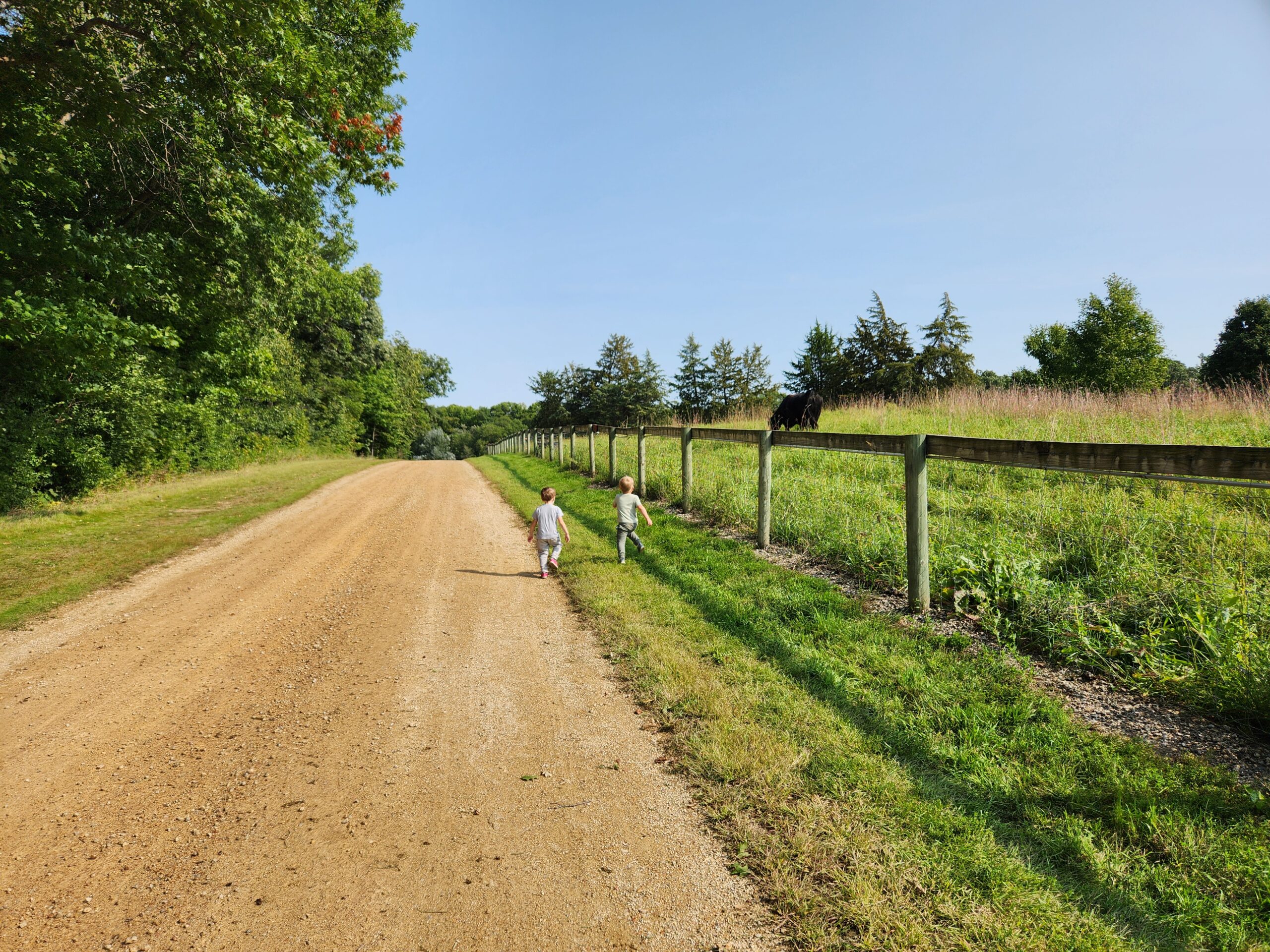
Mostly I just look at my kids when they’re playing together at home, and I sigh. Like my sister and I, they are highly imaginative (that’s what lack of screens will do to you, again speaking from personal experience). They can get lost all day in worlds of their own design, inside or outside. I’m glad that my oldest likes the social aspect of school, as he’s highly extroverted.
But I often wonder how much happier kids would be, teenagers would be, we all would be if school built on young kids’ natural inclinations rather than “early literacy.” Kids love being outdoors and moving their bodies. They love creating art and music, and some of them love to dance (I have one of those). They are fascinated by life and growth in the natural world. They want to make up games with other kids and have a natural curiosity about the lives of others. I do feel that the American public education system works hard to quell those natural interests rather than work with them.
Will I pull my kids and homeschool? I’m not ready to say that. We’ll see what the future holds when it gets here.
xx Claire